Which motor to choose for your 3D printer? (NEMA Guide 2026)
⚖️ Filament Remaining Estimator
⚖️ WARNING: This ‘Spool Estimator’ tool provides theoretical estimates. Electrotuto disclaims any responsibility related to the use of this data.
Motors are a key component of 3D printers, as they allow the movement of the extruder and the print bed in three dimensions (X, Y, and Z). There are several types of motors that can be used in 3D printers, each with its own advantages and disadvantages.
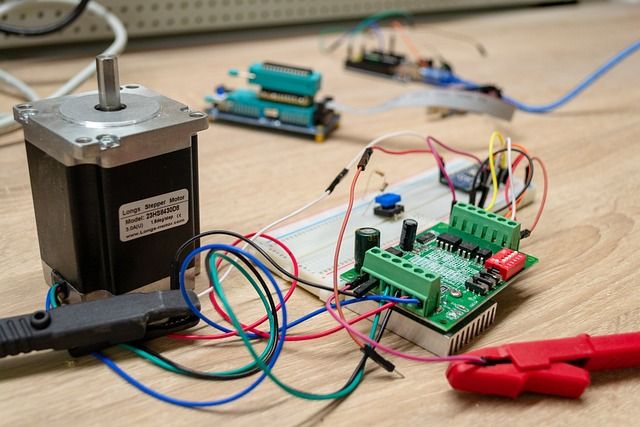
Stepper motors are the most commonly used in 3D printers. They allow the extruder and the bed to move precisely and repeatedly, thanks to a rotation system that breaks down movement into small steps. They are generally reliable and easy to maintain, but they can be noisy and generate vibrations. Among stepper motors, we find NEMA 17 motors, which are small and commonly used in 3D printers. They have a diameter of 17 millimeters and a thread pitch of 1.8 degrees, allowing them to perform precise and repetitive movements. They are generally quite compact and lightweight, but can be noisy and require regular maintenance.
Servo motors are also used in some 3D printers. They allow the speed and position of the extruder and the bed to be controlled precisely, thanks to a feedback system that corrects position deviations. They are generally more expensive and more complex to implement than stepper motors but offer better precision and higher movement speed. However, they can be noisy and generate vibrations.
It is important to choose the motor that best suits your needs and your use of the 3D printer, taking into account print quality, print speed, printer lifespan, and installation and maintenance costs. Do not hesitate to ask for advice from professionals or experienced users to help you make your choice. Here is a summary of the main advantages and disadvantages of the different types of motors:
Motor Type Advantages Disadvantages
Stepper motors Reliable and easy to maintain Noisy and generate vibrations; can be expensive to implement Servo motors Allow for better precision and higher movement speed; offer a feedback system to correct position deviations More expensive and complex to implement than stepper motors; can be noisy and generate vibrations
There are also other types of motors that are less commonly used in 3D printers, such as DC motors and linear motors. DC motors are generally more powerful than stepper motors but are also more expensive and more complex to implement. Linear motors, on the other hand, are designed to perform translational movements (i.e., straight movements), but are less suitable for rotational movements.
In summary, there are several types of motors that can be used in 3D printers, each with its own advantages and disadvantages. It is important to take into account your needs and your use of the printer to choose the motor that best suits your equipment. Do not hesitate to ask for advice from professionals or experienced users to help you make your choice.
Find out which type of motor to choose for your 3D printer.
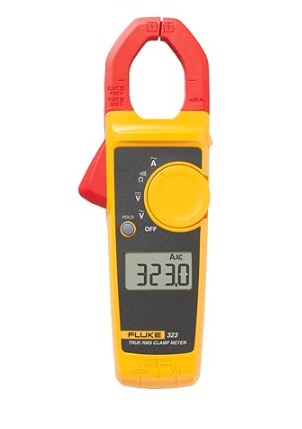
Fluke 323 Clamp Meter (True RMS, 400A AC)
🛠️ The indispensable tool for this project.
Technical Comparison: NEMA 17 vs NEMA 23
The choice of motor depends on the size of your printer and the force required to move your axes.
| Feature | NEMA 17 (Standard) | NEMA 23 (Heavy Duty) |
|---|---|---|
| Ideal Use | Ender 3, Prusa, Voron (X/Y/Z) | Large printers, CNC, heavy Z-axis |
| Torque | 40-60 N.cm | 120-300 N.cm |
| Power Consumption | 1.5A – 2.0A | 2.8A – 4.2A |
3 Key points to avoid “burning out” your motors:
- Check the Vref: Adjust the voltage on your drivers (TMC2209) to avoid sending too much current.
- Cooling: A motor that exceeds 80°C loses its magnetism. Add heat sinks to NEMA 17 motors.
- Wiring: Incorrect phase connection (A+/A- B+/B-) can cause the motor to vibrate without turning.
💡 TIP: For silent operation, prefer SilentStepStick type drivers that divide the step into 256 micro-steps.