CCNA Simulator: The Essential Guide to Passing Your Cisco Certification
A good CCNA simulator is the #1 tool for any student or professional aiming to earn their Cisco certification in 2026. Without intensive lab practice, networking theory remains abstract and difficult to apply in the field. This guide compares today’s best solutions to help you choose the one that will boost your learning.
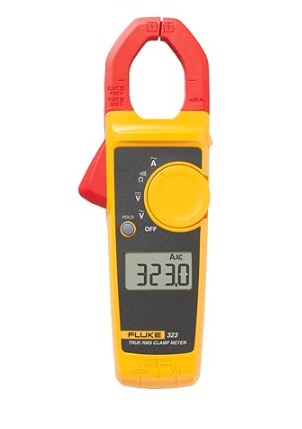
Fluke 323 Digital Clamp Meter (True RMS, 400A AC)
🛠️ The essential tool for this project.
Why is a CCNA simulator mandatory for success?
A CCNA simulator allows you to replicate complex network environments without the constraints of physical hardware. Buying real Cisco routers and switches can cost thousands of dollars, consume a lot of electricity, and generate unbearable fan noise in an office. With powerful software, you can build and tear down topologies in a few clicks, test routing protocols like OSPF or EIGRP, and simulate failures to sharpen your troubleshooting skills.
1. Cisco Packet Tracer: The CCNA simulator for beginners
Packet Tracer is the official CCNA simulator. Free and easy to install, it is ideal for understanding the basics of the OSI model. It allows you to visualize packets moving through the network in real-time, providing invaluable educational assistance.
However, keep in mind that Packet Tracer is a simulation. It mimics Cisco IOS behavior but does not run the actual code. Therefore, some complex commands or real-world bug behaviors are not reproduced.
2. GNS3: High-fidelity emulation
If you want a CCNA simulator that closely resembles real-world production, GNS3 is the go-to choice. It is an emulator: it runs actual Cisco router binary images. You can connect Linux or Windows virtual machines to it and even link your virtual lab to your real local network. GNS3 requires more resources (RAM and CPU), but it is the most comprehensive tool for preparing for professional world challenges.
3. EVE-NG: Server power in your browser
EVE-NG is often considered the spiritual successor to GNS3. It is not just a simple CCNA simulator; it is a full Linux-based virtual environment. It is particularly powerful because it allows you to manage massive topologies without overloading your computer, provided it is installed on a dedicated server. Everything is done via a smooth and intuitive web interface.
Conclusion: Optimize your CCNA preparation
To succeed, do not limit yourself to a single CCNA simulator. Start with Packet Tracer to validate core concepts, then move to GNS3 for your advanced troubleshooting labs. Mastering these tools is the key to becoming a network expert. To go further in securing your installations, check out our guide on Wi-Fi security.
For more information on the exams, visit the official Cisco Certification website.
Note: To deepen your technical knowledge, consult our guide on Ohm’s Law.