Which drive system for your 3D printer? The pros and cons of each type
⚙️ E-Steps Calibration Calculator
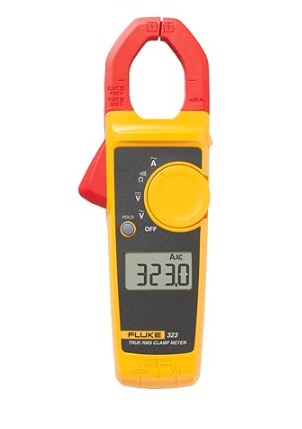
Fluke 323 Clamp Meter (True RMS, 400A AC)
🛠️ The essential tool for this project.
⚖️ WARNING: This ‘E-Steps Calibration’ tool provides theoretical estimates. Electrotuto disclaims all liability related to the use of this data.
3D printers have become increasingly popular in recent years, and it is important to understand the different types of transmission used to move the extruder (the print head) and the print bed in three dimensions (X, Y, and Z).
Mechanical transmission is the most common type, utilizing components such as ball screws, racks, gears, etc., to transmit motion. This type of transmission is generally reliable and durable but requires regular maintenance to prevent wear and mechanical play. It can also be noisy and generate vibrations.
Linear transmission, on the other hand, uses rails or slides to move the extruder and the bed. This transmission is generally silent and does not generate vibrations, but it requires significant movement space and can be expensive to implement. It is often used on professional 3D printers to achieve better precision and higher print speeds.
There are also 3D printers that use fishing line as a transmission method, but they are quite rare and generally used for specific applications. Fishing line is a flexible and strong material, but achieving precise and repetitive movements with this type of transmission can be difficult, which may affect print quality. Additionally, fishing line can stretch and deform over time, impacting the 3D printer’s accuracy.
It is therefore important to check the type of transmission used by the 3D printer you wish to purchase and to research reviews and tests from professionals or experienced users to help you make your choice. Do not hesitate to ask the community and manufacturers for more specific information on the performance and limitations of each transmission type.
In summary, each type of transmission has its own constraints, advantages, and disadvantages, and it is important to choose the one that best suits your needs and budget. Whether you opt for mechanical, linear, or fishing line transmission, it is essential to take the time to understand how your 3D printer works and to maintain it properly.
Continuing on the subject of transmissions in 3D printers, it is important to mention pulleys, which are often used to transmit motion to the extruder and the bed. Pulleys are toothed wheels that transmit motion via a belt or cable tensioned between them.
Pulleys are frequently used in 3D printers to achieve precise and repeatable transmission because they help reduce play and friction. They are also easy to replace and maintain, which is a significant advantage for a 3D printer that needs to operate continuously.
It is important to choose high-quality pulleys suited to your 3D printer, taking into account diameter, number of teeth, material, and strength. It is also recommended to check the belt or cable tension to avoid transmission issues.
To calculate the distance traveled by the extruder or the bed based on motor rotation and pulley diameter, the following formula can be used: distance = diameter x pi x number of rotations. For example, if you have a pulley with a 20 cm diameter and the motor makes 10 rotations, the distance traveled will be 20 x 3.14 x 10 = 628 cm.
Understanding how pulleys work and maintaining them correctly is vital to ensuring efficient motion transmission in your 3D printer. Feel free to consult professionals or the community for advice and tips on choosing and using pulleys.
In summary:
Here is a summary table of the main types of transmissions used in 3D printers, along with their constraints, advantages, and disadvantages:
| Transmission Type | Constraints | Advantages | Disadvantages |
|---|---|---|---|
| Mechanical transmission (ball screws, racks, gears, etc.) | Requires regular maintenance; can be noisy and generate vibrations | Allows for precise and repetitive movements; generally reliable and durable | Can be expensive to implement; requires significant movement space |
| Linear transmission (rail, slide) | Requires significant movement space; can be expensive to implement | Allows for precise and repetitive movements; generally silent and does not generate vibrations | May be less durable and shock-resistant than mechanical transmissions |
| Fishing line | Can stretch and deform; can be difficult to use for precise and repetitive movements | Can be lightweight and easy to implement; often flexible and adaptable | May be less precise and less durable than other transmission types |
For optimal transmission, read our guide on 3D transmission types.