Guide to Electrical Engineering Symbols: Thermal Relay, Contactor and Motor
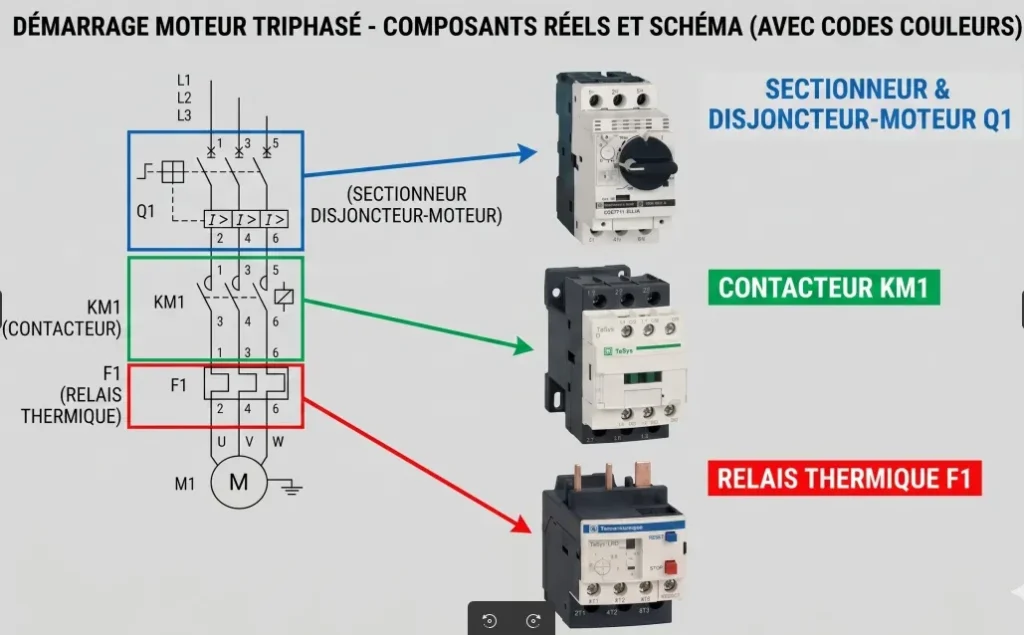
In the field of industrial automation and electrical engineering, a thorough understanding of standardised symbols (IEC 60617) is essential for reading and designing professional electrical diagrams. This article details the key symbols used in motor protection.
⚡ Réponse Rapide
Standardised electrical symbols ensure that industrial diagrams can be understood universally. A contactor is represented by a coil (K) and power contacts; a thermal relay by a bimetal symbol combined with a control contact (95-96); and a motor by a circle containing the letter M.
1. The Thermal Cut-out Symbol (F1)
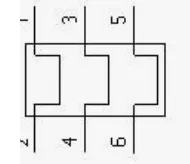
The thermal relay consists of three bimetallic strips connected in series for power control and auxiliary contacts (95–96 NC and 97–98 NO) for control.
- IEC symbol: A rectangle crossed by three broken lines (representing the bimetallic strips).
Function: Protection against prolonged overloads.

Relais de protection thermique Schneider Electric LRD08 (2.5-4A)
🛠️ L’outil indispensable pour ce projet.
2. The Contactor Symbol (KM1)
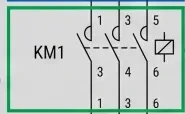
The contactor is a power-handling device controlled by a coil (A1-A2).
3. Interactive Diagram: Direct Motor Start
Here is a realistic simulation of a complete industrial system. Note the physical connection between the push-button switch, the KM2 contactor and the thermal protection relay.
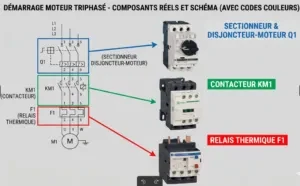
See also: For a detailed guide on setting the trip current (Ir), please refer to our expert guide on How Thermal Relays Work.
Note: Article written by the Electrotuto team of experts to support students studying for a BTS in Electrical Engineering.
🧠 Sélection : Sujets connexes
Notre algorithme a trouvé ces articles qui partagent une forte proximité thématique avec votre lecture actuelle :
- 🔗 Tout savoir sur le Relais Thermique : Fonctionnement, Choix et Réglage (Affinité: 85%)
- 🔗 L’Histoire du Relais Thermique : De l’Horlogerie à l’Industrie Connectée (Affinité: 81%)
🎓 Quiz Rapide : Testez vos connaissances
1. Quel est le repère normalisé du Relais Thermique ?