ESP32 vs Arduino: The Essential Guide to Choosing Your Microcontroller in 2026
🔋 ESP32 Battery Life Estimator
⚖️ WARNING : This ‘ESP32 Battery Life’ tool provides estimates based on standard mathematical models. Electrotuto cannot be held responsible for calculation errors or material consequences related to its use. Always verify your parameters manually.
The ESP32 vs Arduino duel is the starting point for almost all modern home automation or robotics projects. Whether you are a seasoned engineer or a beginner maker, understanding the nuances between these two platforms is crucial to avoid wasting your time and money. In this comprehensive feature, we will analyze every technical detail to determine the best choice for your needs.
Why compare ESP32 vs Arduino today?
The ESP32 vs Arduino debate is not just a numbers game. It is a technological evolution. The Arduino Uno, with its ATMega328P processor, led the way in 2005. But in 2026, needs have changed. We want Wi-Fi, Bluetooth, and power for Artificial Intelligence. The ESP32 from Espressif Systems meets these expectations where the classic Arduino starts to show its limits.
1. Computing Power: The end of 8-bit?
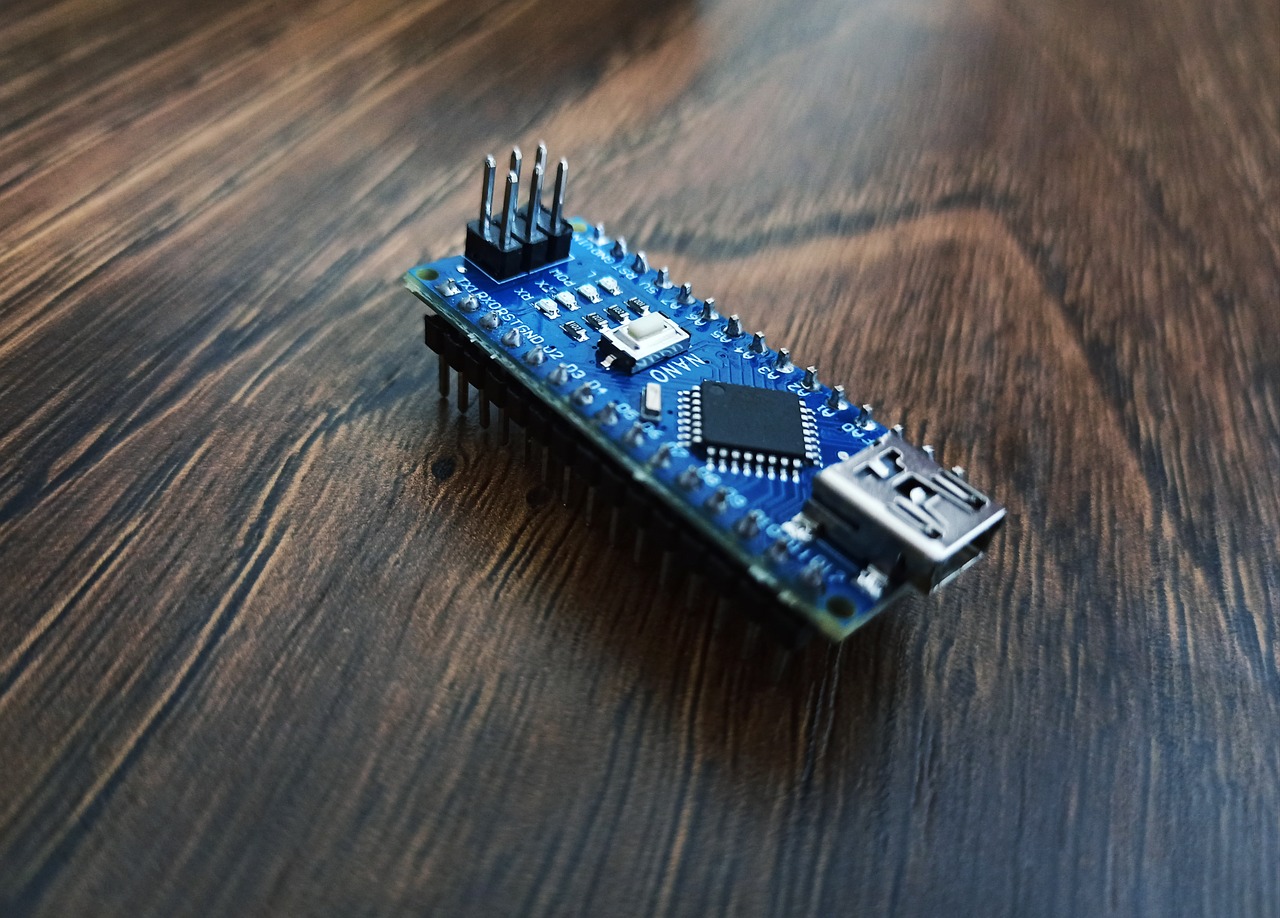
In the ESP32 vs Arduino matchup, execution speed is the first criterion. The Arduino Uno runs at a fixed frequency of 16 MHz. This is sufficient for blinking an LED, but totally inadequate for encrypting an HTTPS connection or processing an audio stream.
The ESP32, on the other hand, features a Dual Core processor clocked at up to 240 MHz. That’s a 15-fold increase in power! Furthermore, the ESP32’s 32-bit architecture allows for handling complex calculations far more efficiently than the venerable 8-bit architecture of the Arduino.
2. RAM and Storage: The ESP32 pulls ahead
Another critical point in the ESP32 vs Arduino duel is RAM management. The Arduino Uno has only 2 KB of SRAM. This is very little: if you try to load a complex web page, the Arduino will crash due to lack of memory.
The ESP32 offers 520 KB of internal RAM. You can store massive data arrays, perform light image processing, or host a smooth dynamic web interface. In terms of storage (Flash), the ESP32 typically offers 4 MB, compared to only 32 KB for the Arduino.
3. Wireless Connectivity: The heart of IoT
When it comes to connected objects, ESP32 vs Arduino quickly turns in favor of the former. The ESP32 natively includes Wi-Fi and Dual Mode Bluetooth (Classic and BLE). This is what makes it the king of projects like our Home Assistant installation.
On Arduino, you would need to add a Wi-Fi shield (often more expensive than the board itself) or use external modules like the ESP8266, which complicates wiring and code.
4. Power Consumption and Battery Life
One might think the ESP32 consumes more because it is more powerful. That’s incorrect. Thanks to its more modern manufacturing process and its “Deep Sleep” mode, the ESP32 can consume less than 10 micro-amps in standby. For a standalone weather station running on batteries, the ESP32 is paradoxically more efficient than the Arduino.
5. Quick ESP32 vs Arduino Comparison Table
| Feature | Arduino Uno | ESP32 (NodeMCU) |
|---|---|---|
| Processor | ATMega328P (8-bit) | Xtensa Dual-Core (32-bit) |
| Clock Speed | 16 MHz | 240 MHz |
| RAM | 2 KB | 520 KB |
| Wi-Fi / Bluetooth | No | Yes (Included) |
| Voltage | 5V | 3.3V |
Conclusion: Why the ESP32 wins the match
In conclusion, ESP32 vs Arduino ends in an overwhelming victory for the ESP32 for 90% of modern uses. It is faster, more connected, and often cheaper. The Arduino remains, however, an excellent educational tool for schools thanks to its more tolerant 5V voltage.
To learn more about the technologies using these components, visit the official Espressif website or our guides on the best solar lithium battery to power your portable projects.
Note: To deepen your technical knowledge, check out our guide on Ohm’s Law.