
Electrical Engineering Symbols Guide: Thermal Overload Relay, Contactor and Motor
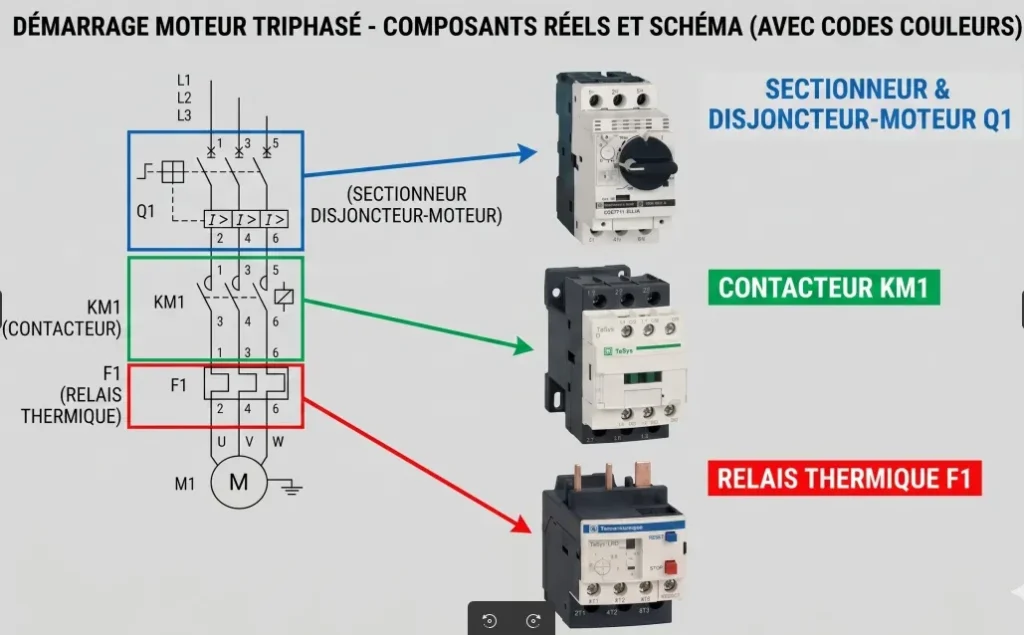
In the field of industrial automation and electrical engineering, mastering standardized symbols (IEC 60617) is fundamental for reading and designing professional electrical diagrams. This article details the critical symbols for motor protection.
⚡ Quick Answer
Standardized electrotechnical symbols allow for a universal reading of industrial diagrams. The contactor is represented by a coil (K) and power contacts, the thermal relay by a bimetal symbol associated with a control contact (95-96), and the motor by a circle containing the letter M.
1. The Thermal Relay Symbol (F1)
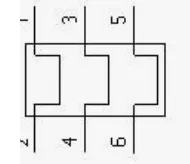
The thermal relay is represented by three bimetallic strips in series on the power side and auxiliary contacts (95-96 NC and 97-98 NO) for control.
- IEC Symbol: Rectangle crossed by three broken lines (representing the bimetallic strips).
- Function: Protection against prolonged overloads.

Schneider Electric LRD08 Thermal Overload Relay (2.5-4A)
🛠️ The essential tool for this project.
2. The Contactor Symbol (KM1)
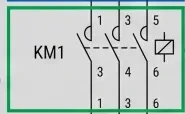
The contactor is the power component controlled by a coil (A1-A2).
3. Interactive Diagram: Direct-on-line (DOL) Motor Starter
Here is a real simulation of a complete industrial assembly. Observe the physical connection between the push button, the KM2 contactor, and the thermal protection relay.
See also: For a detailed study on setting the rated current (Ir), consult our expert guide on Thermal Relay Operation.
Note: Article written by the Electrotuto expert team to support Electrical Engineering students.
🧠 Selection: Related Topics
Our algorithm found these articles that share a strong thematic proximity with your current reading:
- 🔗 Everything about Thermal Relays: Operation, Selection, and Setting (Affinity: 85%)
- 🔗 The History of the Thermal Relay: From Watchmaking to Connected Industry (Affinity: 81%)
🎓 Quick Quiz: Test Your Knowledge
1. What is the standardized reference for a Thermal Relay?


