13533 Datasheet: 50V 330pF Capacitor – Samsung Electro-Mechanics
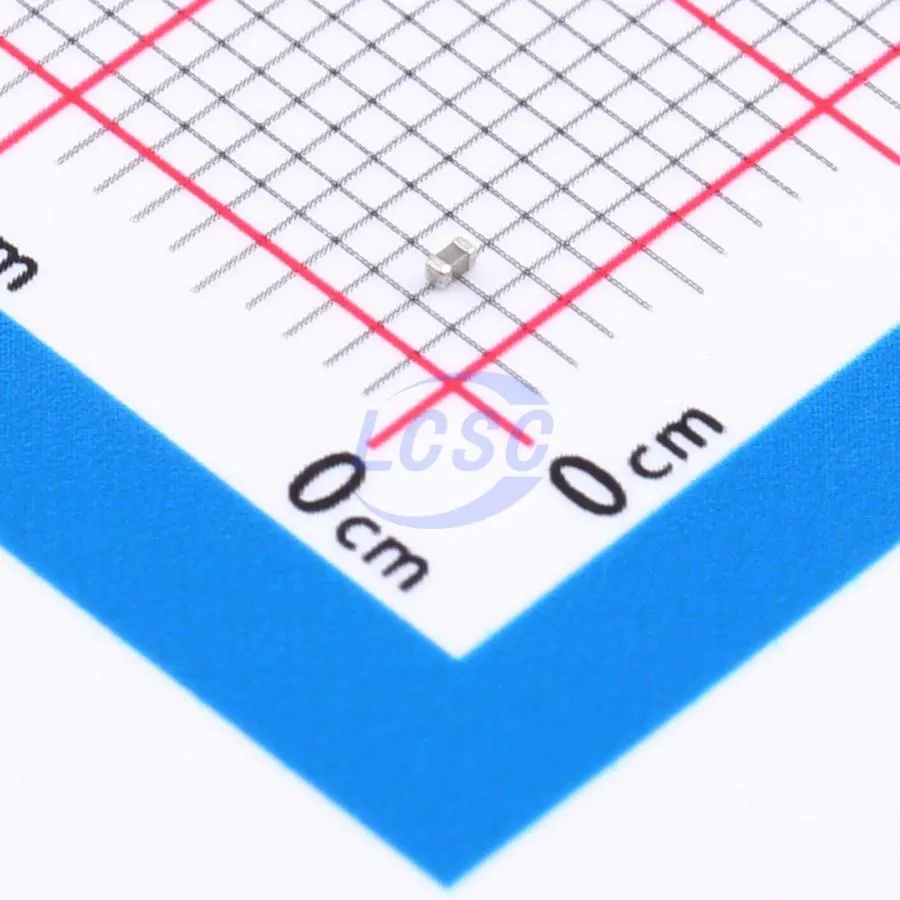
Capacitors — Manufactured by Samsung Electro-Mechanics
This 330pF Multilayer Ceramic Capacitor (MLCC) is a high-precision component utilizing the ultra-stable C0G (NP0) dielectric. Housed in a compact 0402 (1005 metric) surface-mount package, it is designed for applications requiring minimal capacitance drift across a wide temperature range. With a 50V rated voltage and ±5% tolerance, it offers exceptional reliability and low parasitic inductance. Its main advantage is its high Q-factor and temperature stability, making it ideal for frequency-selective circuits.
330pF 50V C0G ±5% 0402 Multilayer Ceramic Capacitors MLCC – SMD/SMT ROHS
📦 0402
⚙️ C0G (NP0)
🌿 RoHS Compliant
⚙️ C0G (NP0)
🌿 RoHS Compliant
- Max Voltage (Vmax): 50V
- Operating Temperature: -55°C to +125°C
Starting at
$0.0027556
✨ Key Features
Ultra-stable C0G dielectric (Class 1); Compact 0402 SMD footprint; Lead-free and RoHS/REACH compliant; High reliability Ni/Sn termination; Low ESR and ESL for high-frequency performance; No capacitance change with applied DC voltage.
🎯 Applications
High-frequency resonant circuits; RF matching networks; Precision timing and filtering; Decoupling in sensitive analog circuitry; Mobile and wireless communication devices.
⚡ Electrical Characteristics
Capacitance: 330pF; Tolerance: ±5% (J code); Rated Voltage: 50V; Dielectric: C0G (NP0); Dissipation Factor: ≤ 0.1%; Insulation Resistance: ≥ 10 GΩ or 500 MΩ·µF (whichever is smaller).
⚠️ Absolute Maximum Ratings
Rated DC Voltage: 50V; Operating Temperature Range: -55°C to +125°C; Storage Temperature: -55°C to +125°C.
🔌 Pinout & Connection Diagram
2-terminal passive SMD component; Symmetrical electrodes (non-polarized); Termination: Nickel (Ni) barrier with Tin (Sn) 100% plating.
🔄 Equivalent & Alternative Components
- Murata GRM1555C1H331JA01
- TDK C1005C0G1H331J050BA
- KEMET C0402C331J5GACTU
- Taiyo Yuden UMK105CG331JV-F
❓ Frequently Asked Questions
What is the difference between C0G and NP0?
C0G and NP0 are interchangeable terms. C0G is the EIA designation, while NP0 (Negative-Positive 0 ppm/°C) refers to the temperature coefficient, indicating that the capacitance remains stable regardless of temperature changes.
Is this capacitor polarized?
No, Multilayer Ceramic Capacitors (MLCCs) are non-polarized components and can be mounted in either orientation on a PCB.
Can I use this for power supply decoupling?
While it can be used for decoupling, 330pF is a very low value typically used for high-frequency noise filtering or precision signal paths rather than bulk energy storage in power supplies.