Electrical Resistors: Significant Advances
📉 RC Filter Cutoff Frequency
⚖️ WARNING: This ‘RC Filter’ tool provides theoretical estimates. Electrotuto declines all responsibility related to the use of this data.
Electrical resistors are essential components of electrical circuits, used to control electrical current and create specific effects. They are made from various materials, including metals, semiconductors, and insulators, and their value is expressed in ohms (Ω).
1. Thin-film resistors


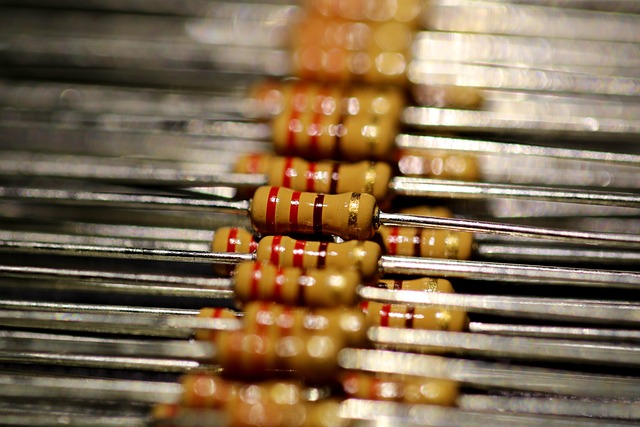
Thin-film resistors are manufactured by depositing a thin layer of resistive material onto an insulating substrate. They are used in integrated circuits and printed circuit boards where space is limited. Thin-film resistors offer high precision and low thermal drift.
2. Thick-film resistors
Thick-film resistors are manufactured by depositing a thick layer of resistive material onto an insulating substrate. They are used in power circuits and control circuits where power dissipation is high. Thick-film resistors offer high stability and low inductance.
3. Wirewound resistors
Wirewound resistors are manufactured by winding a resistive wire around an insulating core. They are used in power circuits and control circuits where power dissipation is high. Wirewound resistors offer high power dissipation capacity and low inductance.
4. Variable resistors
Variable resistors are resistors whose value can be adjusted. They are used in control circuits and measurement circuits where it is necessary to change the resistance value. Variable resistors offer great flexibility and precision.
5. Precision resistors
Precision resistors are resistors whose value is very accurate. They are used in measurement circuits and control circuits where high precision is required. Precision resistors offer high stability and low thermal drift.
Electrical resistors are essential components of electrical circuits, used in many fields including electronics, electricity, and industry. Significant advances in the field of electrical resistors have enabled the development of more precise, stable, and reliable resistors, meeting the growing needs of modern electrical circuits.