1603 Datasheet: 50V 220pF Capacitor – Samsung Electro-Mechanics
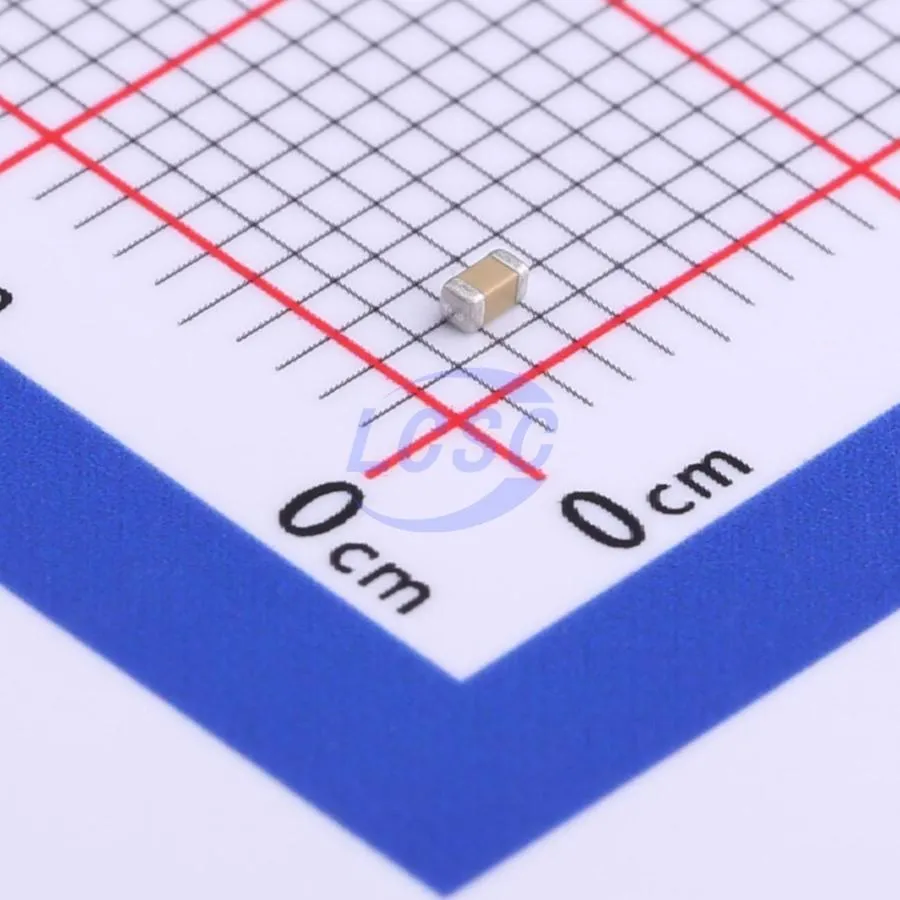
Capacitors — Manufactured by Samsung Electro-Mechanics
This 220pF Multilayer Ceramic Capacitor (MLCC) is housed in a standard 0603 (1608 metric) surface-mount package, optimized for high-density PCB layouts. Utilizing an X7R dielectric, it maintains stable performance across a wide temperature range from -55°C to +125°C with a predictable ±15% capacitance variation. Rated at 50V with a ±10% tolerance, this component is ideal for general-purpose applications requiring reliability and volumetric efficiency. Its low ESR and ESL characteristics make it particularly effective for high-frequency filtering and decoupling. Furthermore, the capacitor is fully compliant with RoHS and REACH environmental regulations.
220pF 50V X7R ±10% 0603 Multilayer Ceramic Capacitors MLCC – SMD/SMT ROHS
📦 0603
⚙️ Multilayer Ceramic Capacitor (MLCC)
🌿 RoHS Compliant
⚙️ Multilayer Ceramic Capacitor (MLCC)
🌿 RoHS Compliant
- Max Voltage (Vmax): 50V
- Operating Temperature: -55°C to +125°C
Starting at
$0.0048889
✨ Key Features
Key features include a compact 0603 SMD footprint, a stable X7R temperature coefficient, and a 50V DC voltage rating. The device offers high reliability through a multi-layer electrode structure and nickel/tin plated terminations for excellent solderability. It is lead-free and environmentally friendly, meeting EU RoHS and REACH directives. The component is non-polarized, allowing for flexible mounting orientations.
🎯 Applications
Designed for a variety of electronic circuits, including decoupling and bypass in digital systems, filtering in power supply circuits, and noise suppression in signal processing. It is also suitable for smoothing in DC-DC converters and general-purpose use in consumer electronics, industrial controllers, and telecommunications equipment.
⚡ Electrical Characteristics
The capacitor has a nominal capacitance of 220 pF with a tolerance of ±10% (K code). The rated voltage is 50 V DC. It features an X7R dielectric (Class II), which provides a maximum capacitance change of ±15% over the operating temperature range. Typical dissipation factor is 2.5% maximum, and it maintains a high insulation resistance of at least 10,000 MΩ.
⚠️ Absolute Maximum Ratings
Maximum operating voltage is 50 V DC. The operating temperature range extends from -55°C to +125°C. Dielectric withstanding voltage is typically 250% of the rated voltage (125V) for a short duration (1-5 seconds) during testing. Absolute maximum ratings should not be exceeded to prevent permanent dielectric breakdown.
🔌 Pinout & Connection Diagram
Mechanical drawing: This is a standard 2-terminal SMD 0603 (1608 Metric) package. Dimensions are approximately 1.60mm in length and 0.80mm in width. The component is non-polarized, consisting of two end-band terminations (Nickel barrier with 100% Tin plating) for surface-mount soldering.
🔄 Equivalent & Alternative Components
- Murata GRM188R71H221KA01D
- TDK C1608X7R1H221K
- KEMET C0603C221K5RACTU
- AVX 06035C221KAT2A
❓ Frequently Asked Questions
What is the meaning of the X7R dielectric code?
X7R is a Class II ceramic dielectric that offers high volumetric efficiency. It provides a stable capacitance change of ±15% within the temperature range of -55°C to +125°C.
Is this capacitor polarized?
No, Multilayer Ceramic Capacitors (MLCCs) are non-polarized components and can be mounted in either direction on a circuit board.
Can I use this 50V capacitor in a 48V circuit?
While the rating is 50V, it is standard engineering practice to leave a safety margin (derating). Using a 50V capacitor in a 48V circuit provides very little margin for voltage spikes; a 63V or 100V rated capacitor might be safer depending on the application.