
7950 Datasheet: 16V Amplifier – onsemi
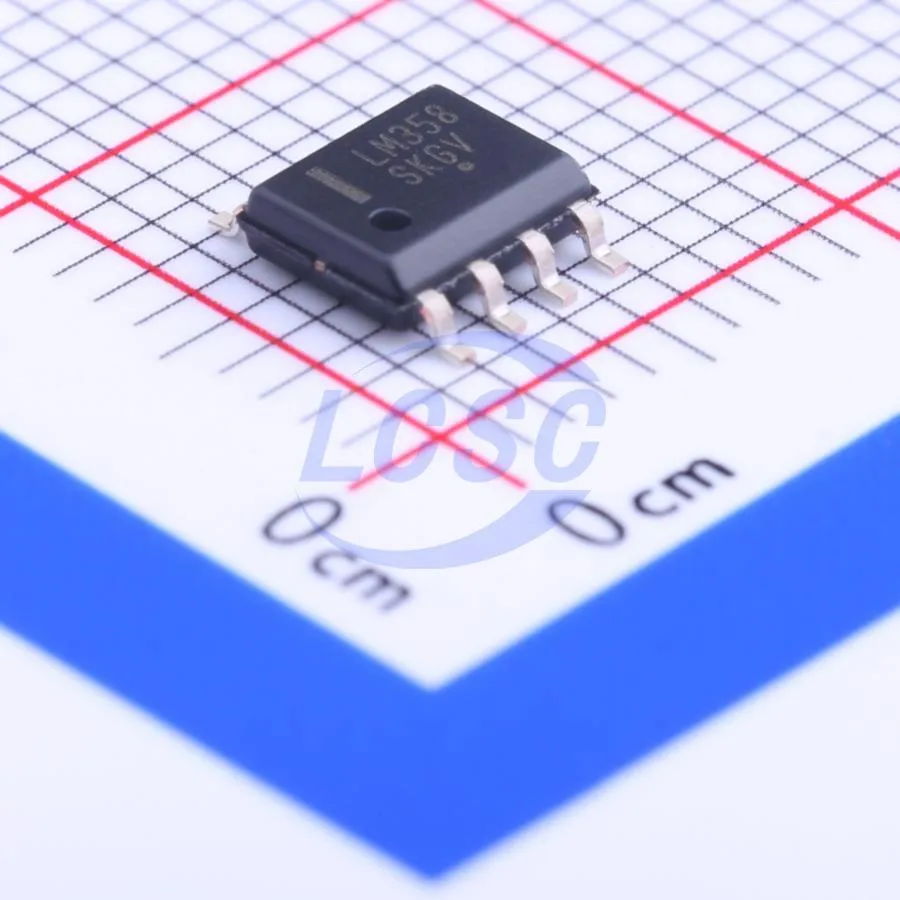
Amplifiers — Manufactured by onsemi
-16V~16V 0℃~+70℃ 10pA/℃ 10uV/℃ 150nA 2 32V 3V~32V 40mA 5nA 700uA 70dB 7mV SOIC-8 Operational Amplifier ROHS
⚙️ Dual Operational Amplifier
🌿 RoHS Compliant
- Max Voltage (Vmax): 16V
- Max Current (Imax): 60mA (total device, quiescent current per amplifier: ~700µA typical)
- Max Power (Pmax): Not explicitly stated (implied by Vmax and Imax constraints)
- Operating Temperature: -40°C to +125°C (operating), -65°C to +150°C (storage)
✨ Key Features
True differential input stage, short-circuit protected outputs, single-supply operation (3.0V to 32V), internally compensated, low input bias currents (~50nA typical), common-mode range extending to negative supply, ESD protection on inputs, single/split-supply operation, automotive-grade variants (NCV prefix) with AEC-Q100 qualification, Pb-free/halogen-free/RoHS compliant.
🎯 Applications
Battery-powered devices, automotive systems (NCV variants), signal conditioning, active filters, general-purpose analog circuits, low-voltage applications, and systems requiring split-supply operation.
⚡ Electrical Characteristics
⚠️ Absolute Maximum Ratings
🔌 Pinout & Connection Diagram
Standard SOIC-8 pinout for dual op-amps. Pin 1: Output 1, Pin 2: Inverting Input 1, Pin 3: Non-inverting Input 1, Pin 4: VEE (negative supply), Pin 5: Non-inverting Input 2, Pin 6: Inverting Input 2, Pin 7: Output 2, Pin 8: VCC (positive supply).
🔄 Equivalent & Alternative Components
- LM324 (quad equivalent)
- TL072
- OP07
- NE5532
❓ Frequently Asked Questions
Can the LM358 operate with a single 3.0V supply?
Yes, the LM358 is designed for single-supply operation down to 3.0V, making it suitable for low-voltage applications.
What is the typical quiescent current per amplifier?
The typical quiescent current per amplifier is 700µA, significantly lower than traditional op-amps like the MC1741.
Does the LM358 support split-supply operation?
Yes, the LM358 supports split-supply operation with a total supply voltage range of ±16V (32V total).
What is the input offset voltage range?
The input offset voltage is typically 2.0mV, with a maximum of 7.0mV under standard conditions.
Are there automotive-grade variants of the LM358?
Yes, the NCV2904 and NCV2904V variants are AEC-Q100 qualified and designed for automotive applications.